
Milpitas Neighbor Sources by Block
Milpitas neighbors appear in parcel, property, historical, election, permit, and community layers. They answer different questions: a map shows shapes, a deed a recorded interest, a directory a dated entry, and a voluntary group may hold private contacts.
| Source | What It Shows About a Block | Access |
|---|---|---|
| SCCMap GIS | Touching parcel shapes, APNs, jurisdiction, and selected public layers | Free map browsing at the county viewer |
| Santa Clara County assessor | Parcel, situs, tax, value, and mailing-address clues for each selected APN | Address or APN web search; owner-name internet mode is restricted |
| Reverse directories | Published occupants or subscribers by sequential street number in a past year | History San José or California Room, generally in person |
| Milpitas permits | Address-keyed project dates, scope, applicants, and owner fields where available | ApplicationXtender, City Hall microfilm, or research request |
| Voter file | Registered voters at an address only under an approved statutory purpose | Authenticated self-lookup or controlled county/state request |
| Neighborhood Watch | Voluntary block maps, phone trees, and meeting coordination | Milpitas Police Community Relations Unit, 408-586-2400 |
No authoritative citywide neighborhood-association member directory was located. Public officers or general contacts may be available when an organization chooses to publish them, but a neighbor search should never turn that choice into a presumed roster.
Map Milpitas Parcels Around One Address
SCCMap is the first practical tool for a block lookup because it lets a researcher see the target parcel and the shapes that touch it. Search, layers and legend, identify or select, measure, print, and share controls can vary with the viewer version. The map is a spatial aid, not a public radius directory.
- Search the target address or APN in Santa Clara County SCCMap and zoom until parcel boundaries and APN labels are readable.
- Select the target parcel and copy its APN, location, and jurisdiction clues before moving outward.
- Click each parcel that touches the target, copying every APN. Note the legal map and check layers for right-of-way, multifamily, common, or noncontiguous parcels.
- Run each APN through the Santa Clara County assessor address/APN search and keep situs and mailing fields separate.
- Use deeds, permits, reverse directories, or an approved voter-file route only when the question calls for ownership, a historical household, project context, or registered-voter evidence.
When the question expands from the immediate block to every number on a named street, switch to the Milpitas by-street records walkthrough. The neighbors search stays focused on parcels that touch or sit immediately around the starting address.
Turn Each Milpitas Parcel Into an APN
An APN is the assessor parcel number used to find a tax parcel. It is the bridge between the selected shape in SCCMap, the assessor detail, and later deed or permit references. Save the APN before copying a person's name, because the parcel key is more stable than a mailing label and helps prevent a same-name mix-up.
- Parcel
- A mapped unit of land represented by an APN and related assessor or map records.
- Situs address
- The physical location assigned to the parcel for assessor, permit, or GIS purposes.
- Mailing address
- The destination used for tax or other correspondence, which may be away from the parcel.
- Adjacent parcel
- A mapped lot that touches the target geometry; a nearby parcel is not always an adjacent one.
- Common parcel
- A shared or nonresidential parcel, such as a right-of-way or common area, that should not be counted as a separate household.
Milpitas's edge geography makes that discipline important. Postal city, county, incorporated city, and service areas are not interchangeable. A map click establishes location context; it does not identify every person at the address.
Milpitas Mailing and Situs Addresses
Insider tip: matching owner mailing and situs addresses may suggest owner occupancy, but it never proves it. A tax mailing address can be outside Milpitas, and a person associated with a parcel can be an owner, an agent, an applicant, or a former interest holder. The assessor's public internet service is address or APN keyed rather than a public owner-name directory. Government Code section 6254.21 also limits publication of certain protected home addresses and telephone numbers.
The assessor search distinguishes a property address from mailing information. The advanced address mode uses Street Number and Street Name, with City required and direction, type, and unit options when available. APN searches accept formats such as 12345678 or 123-45-678. Use the parcel detail to understand the record, then verify any ownership or deed claim at the county recorder rather than treating a matching address as a household fact.
Note: The same street address can support different records with different dates and roles, so a neighbor lookup needs a source date beside every name.
Block Voter Data Has Controlled Access
California My Voter Status is an authenticated individual lookup. It asks for the registered person's first name, last name, date of birth, and identity details such as a driver's license or ID number or the last four digits of a Social Security number when prompted. It can return that voter's registration address, status, party or language preference, precinct or district, and election information. It cannot be used to browse a Milpitas block by entering a neighbor's name.
| My Voter Status field | Type | Block-search implication |
|---|---|---|
| First Name | Required text | Matches the authenticated voter, not a street list |
| Last Name | Required text | Needs the voter's exact registration context |
| Date of Birth | Required date | Private verifier for an individual match |
| Driver license, ID, or SSN suffix | Conditional authentication | Not public output for nearby residents |
| County | Conditional selection | Santa Clara County context when prompted |
| Submit | Control | Returns the authenticated record only |
Broader voter-file extracts are governed by Elections Code sections 2180 through 2194.1. A request requires an approved statutory purpose and controlled requester information; commercial use, harassment, and unauthorized reproduction are prohibited. Santa Clara County's Registrar of Voters is the local custodian for registration and election data, but a block-level extract is not an ordinary public neighbor directory.
Milpitas Associations Are Not Member Rolls
Planning materials refer to neighborhood associations and outreach, but the research did not locate an official citywide association inventory with member names. That gap matters. A public officer, meeting notice, or general contact can support civic connection; it cannot be expanded into a list of households that belong to the group. Religious, veterans, fraternal, and neighborhood organizations may preserve historical rosters, while current membership lists are private unless an archive or organization has chosen to publish them.
| Community layer | Public clue | Limit |
|---|---|---|
| Neighborhood associations | Public officers or general contact when voluntarily posted | No authoritative citywide member directory was located |
| Milpitas Police Neighborhood Watch | Help organizing a block map, phone tree, and meetings | Lists are voluntary and private |
| Historical organizations | Possible older rosters or local-history material | Access depends on the holder and its terms |
The verified local contact is the Milpitas Police Community Relations Unit at 408-586-2400. It can help organize a Neighborhood Watch group, but it does not publish a general list of Milpitas neighbors.
Milpitas Police Records Have a Separate Gate
Police records can contain an incident address or named parties, but they are not a neighbor directory. The Milpitas Police Records Division accepts eligible requests online, by mail, or in person. Most releasable reports are described as available in five to seven working days, while juvenile, sex-crime, and records limited by state law may be withheld.
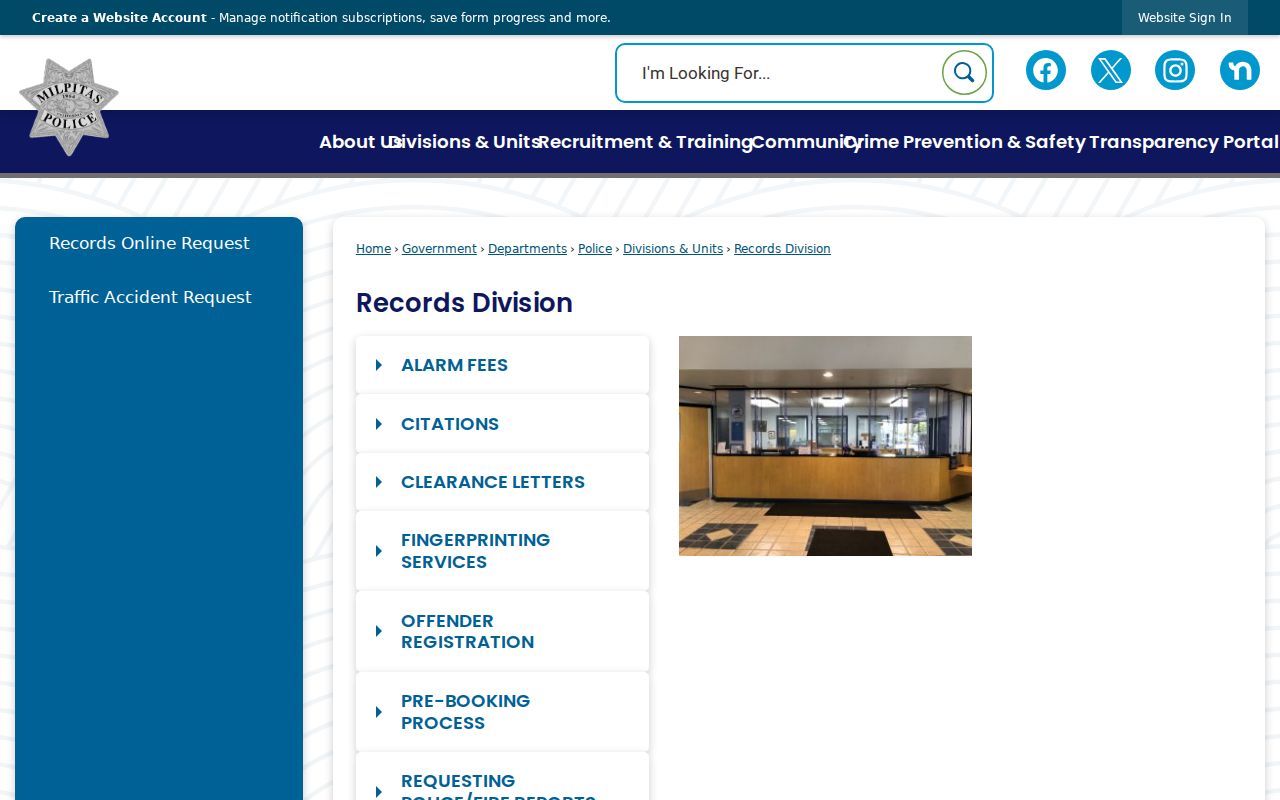
The Records Division page shows the official channel and eligibility boundary. Use it as a targeted records route, not proof that a person lived nearby.
The Milpitas Police records-request form asks for requester identity and contact fields, the delivery choice, report type, incident number or date, location, and an eligibility certification. Government ID, a business card, or a signed waiver may be required, and payment comes before release where applicable.
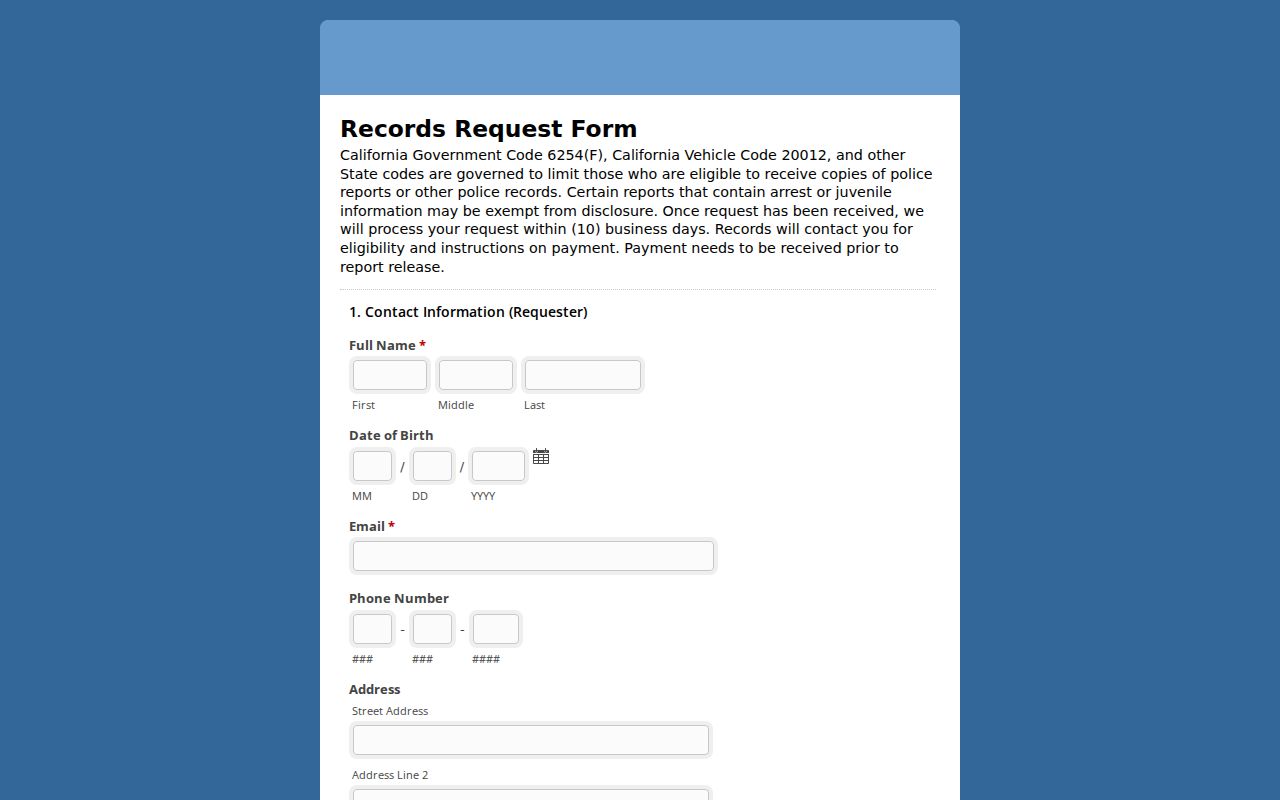
The form's fields show why a police request is a targeted records process. The city form states processing within ten business days and contacts the requester about eligibility or payment; it does not turn police files into an open block roster.
Official Rolls Versus Commercial Tools
Official rolls and commercial neighbor tools answer different questions. Myth: no single public block list captures every Milpitas neighbor. County, city, election, court, and library custodians identify the record series and its access rule. Commercial services recombine public or purchased data, may be stale, and can merge similar names. They are not a substitute for the source.
| Source type | Useful strength | Limit to keep in view |
|---|---|---|
| Official parcel or deed record | Known custodian, APN, legal description, and recorded date | Ownership or recorded interest does not prove current occupancy |
| Official voter record | Authenticated status or controlled address extract | Individual authentication and statutory purpose restrict access |
| Historical directory | Published name and address at a stated date | Coverage, subscriber status, and spelling vary by edition |
| Commercial neighbor category | May collect several public-data clues in one view | Source dates, corrections, privacy status, and same-name accuracy may be unclear |
The California Attorney General's Public Records Act overview explains that a request can seek identifiable records, while an agency need not create a new list or answer a research question. The linked capture is a useful reminder that official access still depends on the custodian and the record's exemption.
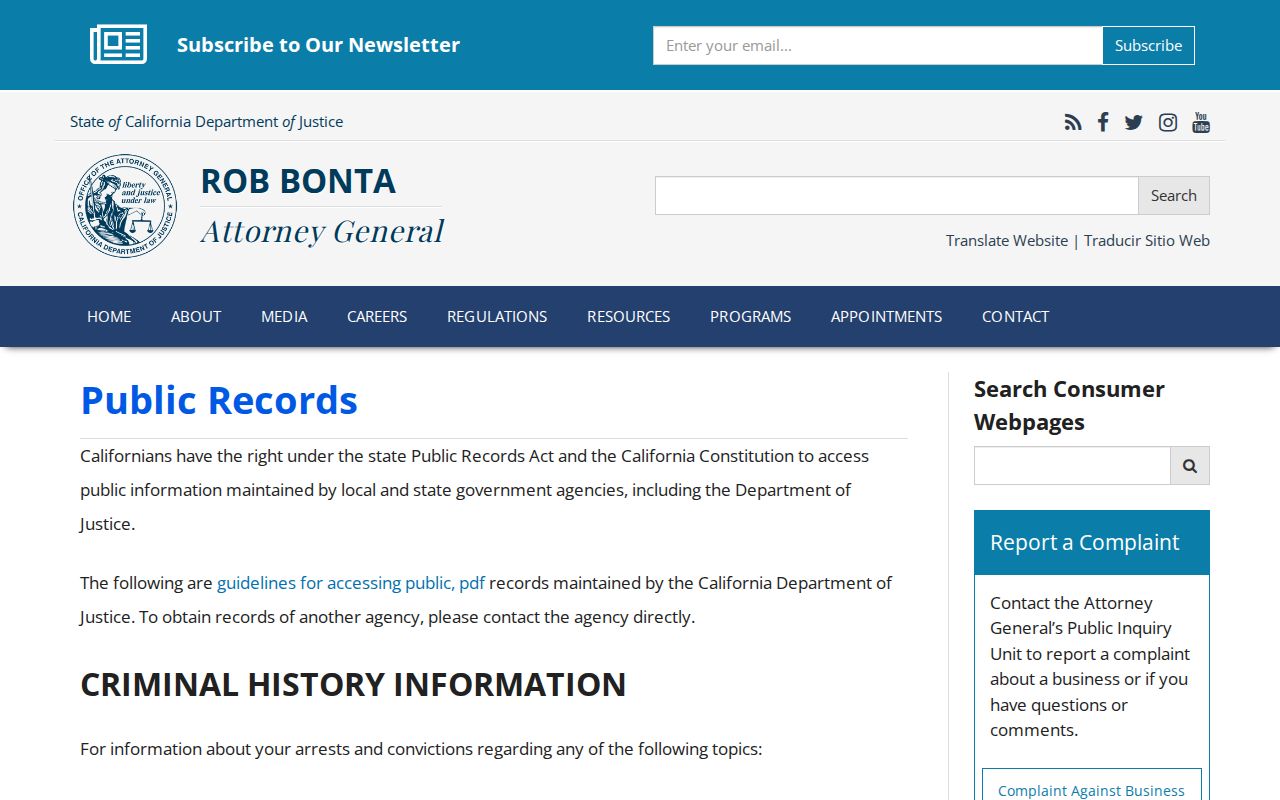
For a block question, name the existing source, address, APN, date range, or record series. That produces a clearer and more lawful request than asking for every person near an address.
Private Layers Around Milpitas Neighbors
People without a recorded ownership interest and household members are not comprehensively indexed in the parcel layer. Utility, delivery, and DMV residential data are not public neighbor directories. California's Driver's Privacy Protection Act and state law restrict DMV information. Safe at Home gives qualifying protected participants a substitute mailing address and confidential forwarding, so a public record may omit the physical location.
The California Safe at Home program describes that protected-address route. Recorded documents can also redact or limit sensitive identifiers under applicable law, and Government Code section 6254.21 restricts publication of certain officials' home addresses and telephone numbers after a request. A known ZIP, APN, or street does not cancel those protections.
Privacy and lawful use. Milpitas neighbor records support personal safety awareness, civic curiosity, and ordinary block connection. Do not use a parcel, voter, police, or directory clue to watch, threaten, harass, or intimidate a person.
Milpitas Federal Records Need Identity Checks
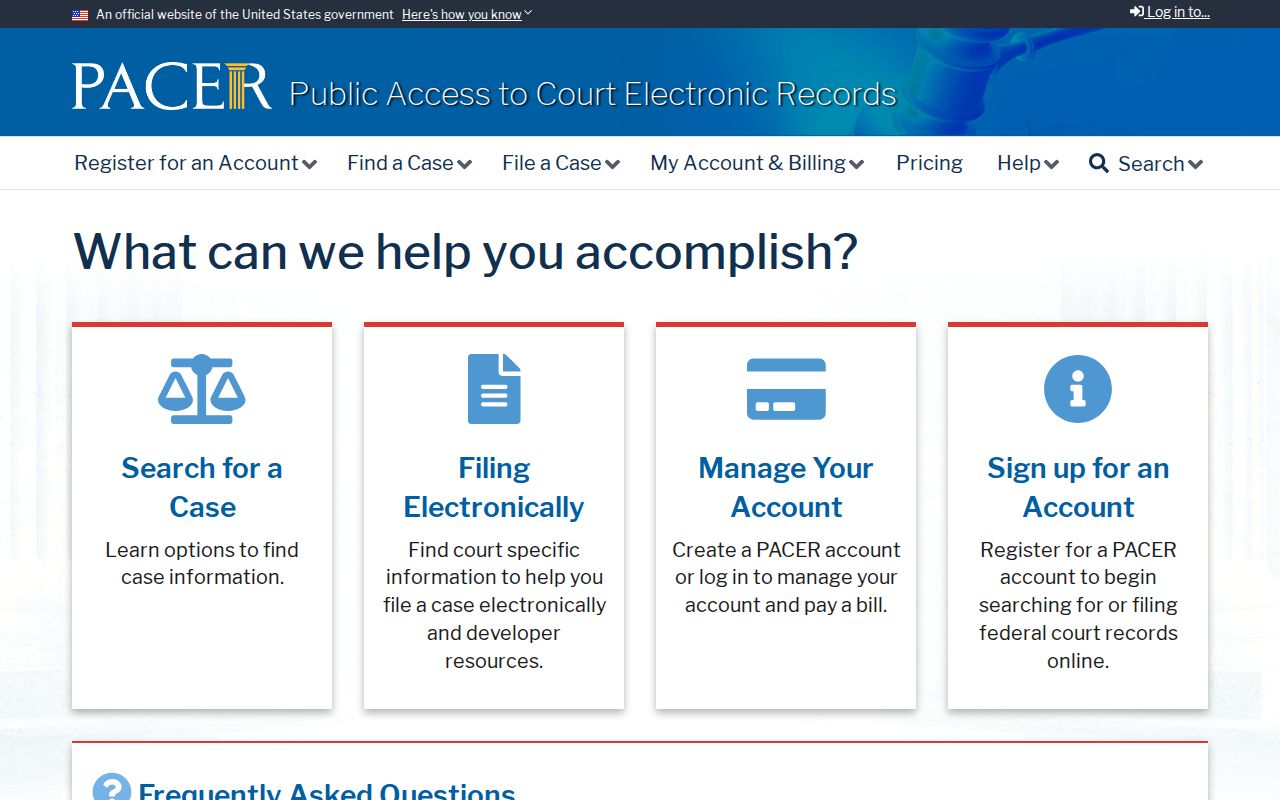
Federal court records can be another identity clue when a person or property question crosses into a federal case, but a docket is not proof that someone lives on the block. The Northern District of California provides federal case access information, while PACER requires an account and supports national party and case-index searching.
The Northern District of California case-access page describes the federal route.
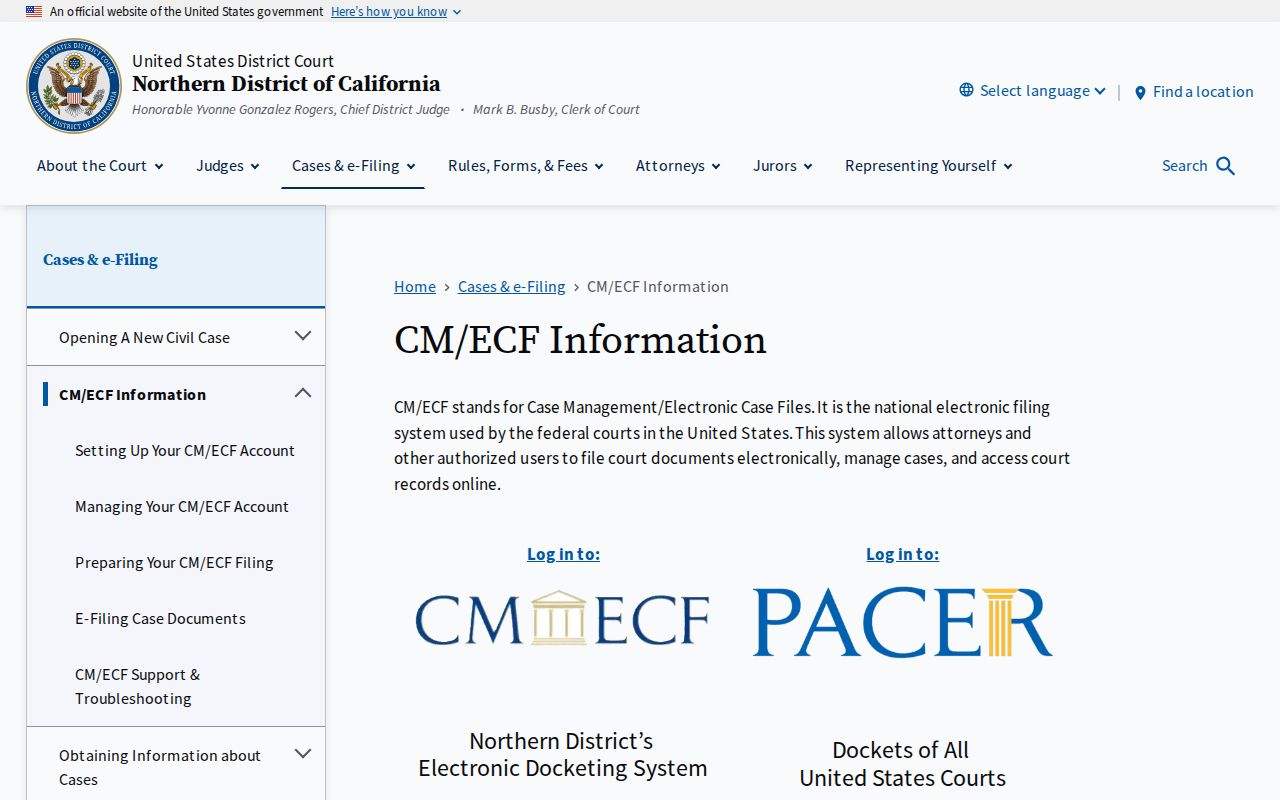
Federal courthouse public terminals also provide access under federal rules. The Northern District route is separate from Santa Clara County parcel and voter systems, so a case result needs its own court, date, party role, and location check.
The PACER party and case search charges $0.10 per page, caps a document at $3, and waives fees when quarterly usage is $30 or less. Typical public fields include case number, case title, court, case type, filing date, party name and role, attorney, status, docket events, hearings, and disposition when entered.
Compare middle initials, attorneys, filing dates, connected property or probate facts, and party roles before treating a federal name as one of your Milpitas neighbors. A bare name match is not enough.